Windows NT and Exchange 5.5
Where my experience began: Windows NT servers and domains, and Exchange 5.5. It predates my certification record, which starts in the Windows 2000 era.
About
Formally, Palanikumar Annamalai. I am a Microsoft Cloud, Infrastructure, Identity & Security Architect based in Doha, Qatar, a Microsoft Certified Trainer, and a former Microsoft Cloud Solution Architect (2021–2024).
My work with Microsoft infrastructure began with Windows NT and Exchange 5.5. Since then I have worked through successive generations of it: implementing, migrating, upgrading and troubleshooting each one, and carrying what it taught me into the next.

Technology progression
The products changed names and architectures; the work did not. The stages below are in order, they overlap, and they are not dated.
Where my experience began: Windows NT servers and domains, and Exchange 5.5. It predates my certification record, which starts in the Windows 2000 era.
The move from NT domains to Active Directory, then successive Windows Server releases. Each generation brought upgrades, domain migrations, and the work of finding everything that depended on the old one.
Exchange from 5.5 onwards: upgrades and mailbox migrations from version to version, and the coexistence problems of running two generations at once.
Managing estates at scale with System Center: deployment, configuration and monitoring, and the operational discipline that has to come with them.
Moving workloads from physical servers to virtual machines and clustering them for availability: quorum, witnesses, and what survives a node failure.
Clustered Windows Server with local disks pooled into resilient storage: resiliency choices, capacity planning, and reading what the cluster reports when a disk or node fails.
Connecting on-premises estates to cloud services: hybrid identity, Exchange hybrid, and the decisions about what moves and what stays.
Azure infrastructure alongside what still runs on-premises, and an operating model that has to work across both.
Storage Spaces DirectAzure Stack HCIAzure Local
At Dell (2020–21) and then at Microsoft as a Cloud Solution Architect (2021–24), my hands-on work was Azure Stack HCI and Windows Server with Storage Spaces Direct. Microsoft renamed Azure Stack HCI to Azure Local on 19 November 2024; the clustering and storage underneath are still where much of the troubleshooting happens.
Exchange Online, Teams and the Microsoft 365 services that replaced much of what used to run on-premises, and the administration and migration work that comes with them.
Microsoft Entra ID and hybrid identity: authentication, Conditional Access, identity governance and Privileged Identity Management.
Microsoft Defender, Sentinel and Purview: security operations, and data and security governance built on Zero Trust principles.
Where the work is now: passkey-first authentication, retiring legacy protocols before they are switched off, and applying identity, data and access controls to AI agents.
What it taught me
Every generation brought a new product. The engineering lessons kept repeating.
The plan is only as good as the inventory of what depends on the old system. The dependency nobody listed is the one that fails on cutover night.
Azure Local still runs on clustering and storage. Entra ID still meets Active Directory in hybrid identity. Knowing the layer underneath is most of the troubleshooting.
Running two generations side by side, sometimes for months, is harder than either the old estate or the new one.
Knowing what a product used to be called is often how you find the right documentation, the right log and the right fix.
From NT domains to Entra ID, whoever controls identity controls everything else. Security work starts there.
The first run teaches the process. The script makes it repeatable, reviewable and teachable.
Current focus
Plenty of people write about Azure Local or Entra ID today. Fewer have run the generations underneath them. That is the perspective I write and teach from.
Windows Server estates, clusters and software-defined storage, and how they extend into Azure and Azure Local.
From Active Directory to Microsoft Entra ID: hybrid identity, authentication, Conditional Access and privileged access.
Exchange since 5.5: on-premises generations, Exchange hybrid, Exchange Online and the Microsoft 365 around it.
Security operations, identity security and data governance, built on Zero Trust principles rather than bolted on.
PowerShell and Microsoft Graph for the repeatable work, and labs, scripts and training so others can do it too.
Selected credentials
Certifications validate parts of the engineering story; they are not the story. These are the current ones most relevant to the work. The full record is verifiable on Credly.
Current, 2026
Recorded AZ-900, AZ-104 and SC-200 training series, and technical presentations. Training
As of September 2026
Certification history
Selected technology areas from my Microsoft exam history, from the Windows 2000 era to today. The work itself started earlier, with Windows NT and Exchange 5.5.
Community
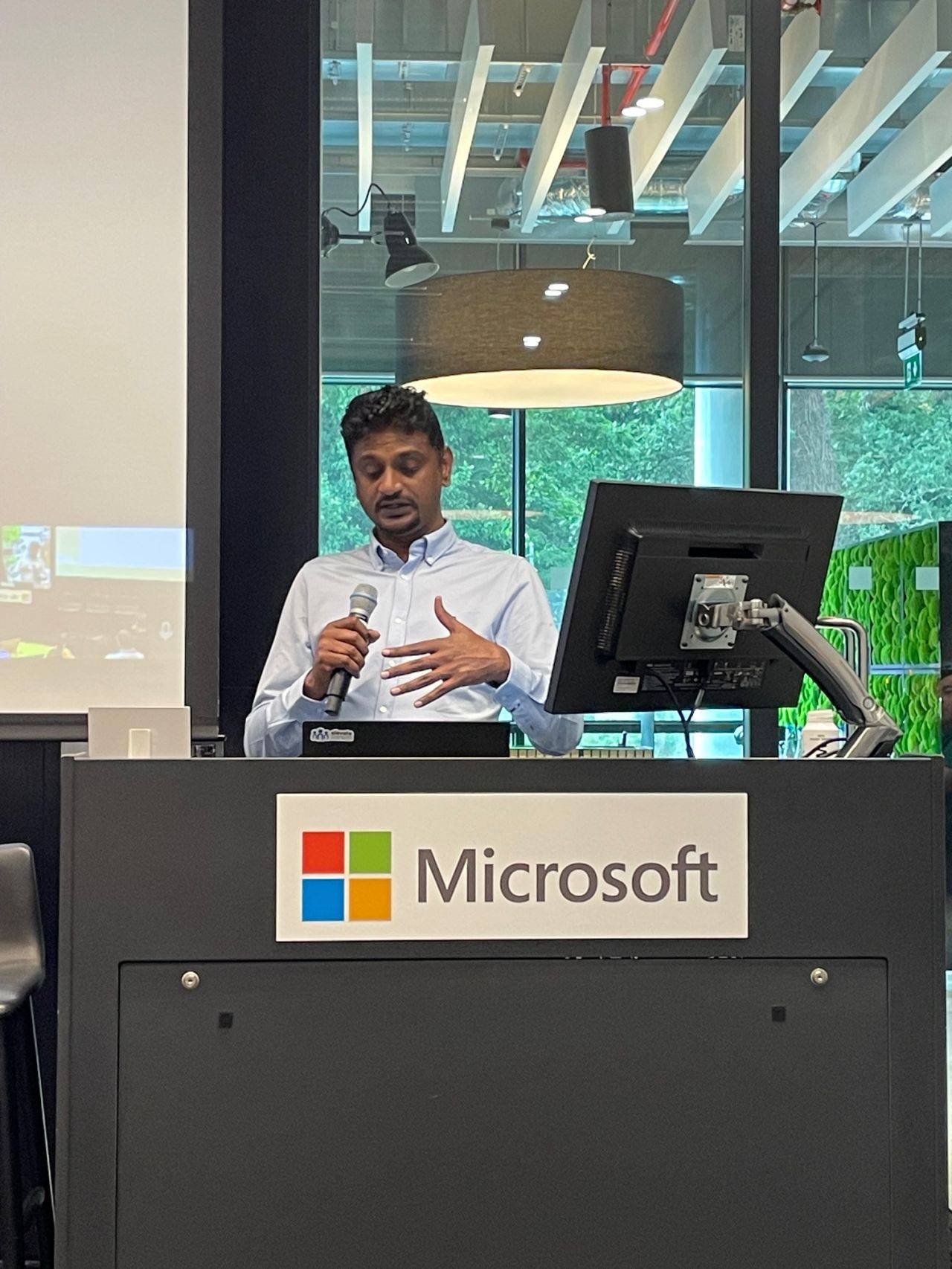
I am a Microsoft Certified Trainer, current for 2026, and I treat teaching as part of the engineering work: if I cannot explain it clearly, I do not understand it well enough.
I have recorded 19 training sessions across AZ-900, AZ-104 and SC-200. Selected recordings will be added after review.
Standards
Contact
Senior architecture roles, training, or a technical question about something on this site: email is the best way to reach me. LinkedIn is where I share shorter technical notes.